

Behind the Music: A Conversation with Chief State Vocalist Fraser Simpson
- Hawk-IT Interviews

- May 1
- 15 min read
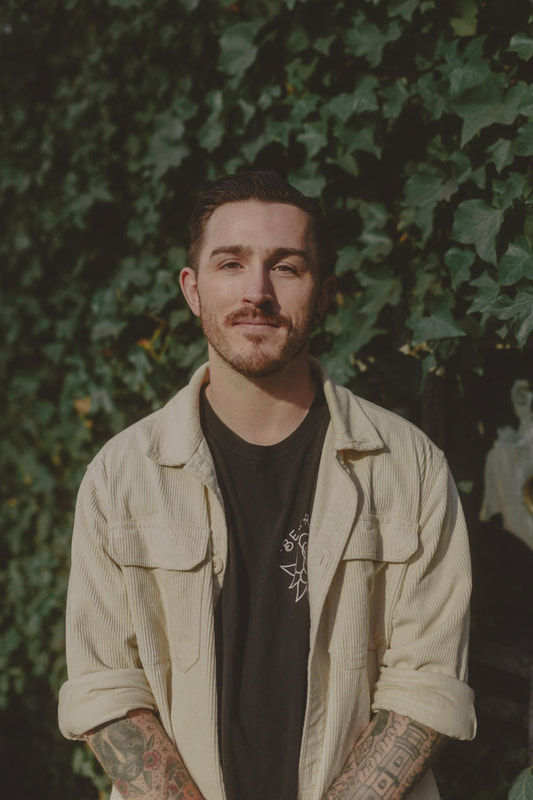
Welcome to Hawk-IT Interviews. Today, I had the pleasure of sitting down with Fraser, the lead vocalist of Vancouver-based, rain-drenched pop-punk band Chief State. Known for their emotionally charged sound and energetic style, the band has been steadily making waves in the scene—and Fraser has been right at the heart of it all.
In our conversation, we dove into his early upbringing and the influences that first sparked his passion for music. He opened up about his personal journey as an artist, the formation and growth of Chief State, and the experiences that have shaped both his songwriting and stage presence. We also touched on the band’s creative process, their evolution over the years, and what continues to drive them forward.
It was an insightful and engaging discussion that offers a deeper look into the person behind the music. I hope you enjoy reading this interview as much as I enjoyed putting it together.
Amit Ahuja: To start at the very foundation of your story, take us back to your earliest memories. What were the environments you grew up in like—your hometowns, the culture, the energy, the sense of community? How did those surroundings—the people, the atmosphere, the challenges, and the opportunities—shape your emotional and creative development during your childhood and teenage years?
Fraser Simpson: I grew up in the UK in a small town called Frome, near Bath and Bristol. My family isn’t musical but my Dad loved early punk music from the 70s so some of my earliest memories are of listening to punk. My Dad would also dress me and my brothers up in wigs and we had those little kid instruments and pretend we were in a band… I suppose it had an effect on me! As a 10 year old I told 4 of my friends we were in a band now, none of us could play instruments. When I was 13 I tried again but this time I was determined, I got a guitar and told my best friend to get one too. Told another friend to buy a bass and then we hit up the only drummer we knew and that’s how my first proper band started. Frome is a very community driven, artsy, musical town and we were well supported, there were a lot of opportunities. We did the standard school shows but there was also a great community centre that would put on Music Mayhem nights for teenagers and bands from our town and others nearby would perform. An early version of the hardcore band Landscapes would play there, Jolé is another successful artist who would play there with his old band. We also got to play the main venue in town, The Cheese n Grain, supporting a touring band once. Frome is a fantastic town and had I not grown up there and had those experiences, I doubt I would still be playing music today.
Amit Ahuja: Looking back now with a bit more perspective, how do you feel those formative years influenced the person and artist you’ve become? In what ways did your upbringing shape your worldview, your emotional depth, your resilience, and ultimately the way you approach creativity and self-expression today?
Fraser Simpson: I think it’s naturally in my personality but this was the first time I had evidence that you can make anything happen by taking action. But also I learned through writing those first songs, playing shows and building connections with people through music showed me that there could be a future where I can express my feelings and emotions without needing to have a real conversation with someone - something I’ve always struggled with. I had found an outlet to process and decompress, I’ve continued to utilise songwriting ever since.
Amit Ahuja: Every local music scene has its own identity—its own pulse. Coming up in Vancouver, what did that environment look and feel like for you? Who were the key players—the venues, the promoters, the community—and were there any defining moments, challenges, or breakthroughs that really shaped your path? How did that scene influence not only your sound, but also your work ethic and sense of identity as musicians?
Fraser Simpson: Vancouver has an affordable space crisis and I think it’s always affected the kinds of venues the city has. When starting out we found that venues were few and far between - at least for new bands like ourselves. But they did exist, and we persisted until we found our space. 333 was a small 150 cap room at the back of an auto shop. A large garage door, 1 bathroom (if you could call it that), small stage, poor sound system which developed over the years, it didn’t have much. But what it did have was a lot of heart and a community of young people looking for connection through music. I suppose it helped shape our band ethos; DIY. We would put on our own shows, sell the tickets, plant posters around town, run the door, run merch, man the sound desk. Our lucky break was Creeper dropping off a Silverstein/Seaway tour in 2017 (they had gotten an offer to support Neck Deep and took it). That meant local openers across Canada and we were picked for Vancouver. I had emailed the Rickshaw as soon as I saw the Creeper news and thankfully they suggested us to the promoter. Since then we’ve been well supported by local promoters, shout out Timur Inceoglu!
Amit Ahuja: On a more personal level, when did music shift from something you simply consumed into something you felt compelled to create? Was there a specific moment or realization that sparked that transition?
Fraser Simpson: Not a specific moment, more of a slow transition into normalcy. You become addicted to it, the next song usually feels better than the last and I continue to chase that high I get when I feel proud of something I’ve made.
Amit Ahuja: What initially drew you to the genre you’re rooted in today? Beyond the sound itself, what was it about the culture—the emotion, the aesthetic, the sense of belonging—that resonated with you on a deeper level?
Fraser Simpson: In my later teens I had moved away from punk music and felt my calling was in indie or alt rock. I was playing in bands and writing solo music but not feeling overly connected to music anymore. It wasn’t until I came across a band in my early twenties that were a part of a new wave of pop punk music called The Story So Far. The moment I heard Under Soil And Dirt I was lurched right back into the angst of my teenage years, but this angst felt more real. I had lived a few years as an adult and had found out how cruel life could be. The music made me feel like I was heard, I understood it and it understood me. I quickly discovered other similar bands like Real Friends, The Wonder Years, Knuckle Puck, Neck Deep, Trash Boat and I was hooked. As I’ve grown so too has my taste and my writing, less angsty, but I am still drawn to the raw emotion that fast punk music makes me feel.
Amit Ahuja: Thinking back to your early influences as a vocalist, were there particular artists, albums, or songs that helped shape your voice and approach to performance? How did those inspirations contribute to the sound you bring to the band today?
Fraser Simpson: Being a Brit living in North America, performing a genre of music that has predominantly been American since the 90s, I found it tough to find my voice. Trash Boat and Boston Manor are two bands from the UK that at the time I started Chief State, also had that new wave pop punk sound. I took a lot of solace from Tobi and Henry as they sang in their English accents, Tobi is also from the south and so my accent and his are similar. I would say they inspired me to be proud to sing in my natural accent. If you listen to our discography chronologically you might think that over time I’ve sold out a little, no longer sounding as British - but you’d be wrong. I still sing in my natural accent, I’ve lived in Canada for over 10 years and today I have a mutt British/Canadian/Pacific Northwest hybrid accent. So my vocals today are less British, yes, but they are still 100% authentically me.

Amit Ahuja: Take us back to the origin of the band. How did the five of you first connect, and what led to the formation of this project? Was there a defining moment where everything aligned creatively and personally, making it clear this was something worth building together?
Fraser Simpson: I travelled and lived in Asia for a couple years after finishing music school in the UK. In 2015 I was living in Japan trying to figure out what I wanted to do with my life and came to the realization that I still had so much unfinished business with music. I decided the next move would be to an English speaking country to give myself the best shot, Vancouver made perfect sense to me with it being so close to the US for touring. I put up an ad on Craigslist and Nik was one of the first replies, we sent demos back and forth and when I arrived in Canada we had put a lineup together. We went through a lot of member changes until it clicked in 2017, we moved forward until 2024 largely unchanged and had decent success. Without taking away from the previous lineup, I would say everything really clicked with this latest formation. The addition of Bran and James have made us feel like we are in our final form. Our latest album Keep Your Friends Closer is the first truly collaborative album we’ve released as a band, as in the past our songs have been predominantly written by me or predominantly written by Nik. We now feel like a unit, each of us having the same creative input. To that end, I feel it is our strongest piece of work to date! KYFC is what Chief State is.
Amit Ahuja: When you first started out, what was the initial vision for the band sonically, aesthetically, and thematically? Looking at where you are now, how closely does that original vision align with your current identity? Where have you evolved or surprised yourselves along the way?
Fraser Simpson: We had the simple goal of making fun, high energy music that makes us feel something. We wanted to tour as often as possible and see as many cities as possible. Our goals have changed over the years as we’ve progressed but those fundamentals remain the same.
Amit Ahuja: Choosing a band name can be a deeply intentional process. Did you go through different ideas before landing on your current one? What made the final choice feel like the most authentic representation of who you are?
Fraser Simpson: We went through a few different names, I’ve always found it really hard to name a band. Initially we ran with Youth, after the album by Citizen, before accepting that it just wasn’t unique enough for us to be easily found on streaming platforms and search engines. We toyed with the idea of Arbutus, the name of a street in Vancouver and the 16 bus I took to work every day. But we took my British accent into consideration, we wanted something that would be unmistakable when said in a loud North American venue and that was ultimately what went against ArbuTus (I refused to pronounce it ArbuDus). There is nothing else called Chief State, it is uniquely us.
Amit Ahuja: Your band name carries a certain weight—can you break down the meaning behind it? What does it symbolize for you emotionally, philosophically, or artistically, and how does it connect to the themes that run through your music?
Fraser Simpson: There’s no real philosophy or theme that ties our name to our music. We live in the province that is home to The Chief, a mountain that overlooks our home city. Chief Province just didn’t have that ring to it, so borrow the American system and you’ve got a pop punk sounding band name all of a sudden!
Amit Ahuja: When it comes to songwriting, every band has its own creative chemistry. Can you walk us through how a song typically begins and evolves for you? Do your lyrics and vocal melodies tend to come from personal experience, introspection, or broader concepts? And what’s something about being a vocalist that people often misunderstand until they experience it themselves?
Fraser Simpson: For me, I’m always music first. I’ll write riffs and chord progressions on guitar and usually from there things come naturally. If the instrumental makes me feel something then the words flow. I don’t usually have an agenda or something I want to say, I let the words come freely and before I know it I’ve something that I’ve been feeling recently or have been bottling up.
Amit Ahuja: With your latest album "Keep Your Friends Closer" which just came out, it feels like you’re entering a new chapter. What sparked the creation of this record, how does it reflect where you are creatively right now, and what do you hope listeners connect with when they hear it? And stepping back, are there particular songs or releases from your past that you see as defining turning points in your journey?
Fraser Simpson: In 2023 we were briefly down to just two band members, me and Joe. The others had decided to move on to pursue other musical projects, school and just other life paths. We didn’t really know whether it was worth continuing, but we decided to hang out and jam and we came up with a couple of riffs. We drank a couple beers and demo’d all day, and from that we created the songs Somebody and parts of what became DAMN! That gave us the spark to push on, to get Bran involved on drums, we convinced Nik to rejoin and James came later on. We met up for a few months every weekend writing songs from scratch in a room together, which as mentioned was different to how we had written in the past. From those writing sessions we created what I believe to be our best work to date!
Amit Ahuja: Looking more closely at the record, can you walk us through the stories and emotions behind tracks like “Damn!,” “Keep Your Friends Closer,” “April Showers,” “No Brakes,” and “Can’t Let Go”? What headspace were you in while creating them, and how did those songs come together?
Fraser Simpson: DAMN! It was one of the first demos and the chorus came to me thinking about the other guys leaving the band, “I can’t stop you from leaving, I said it but I didn’t mean it, I’m feeling so defeated, I said it but I didn’t mean it”. The song then developed into more of a traditional breakup angle, and to get into that headspace I brought back feelings from a previous relationship.
No Brakes is written about experiences we had on our last US tour in 2022, a lot of what is in the lyrics for that one is real situations we were in and how Nik was feeling on the tour. CLG is about the struggle I’ve had with trying to progress this band. It always feels like a grind, it’s never easy and often I’ve questioned why I even try. I wrote the lyrics at a time when I was genuinely considering calling it a day, but there’s always something that keeps me going, this band is like a rope that I’m tangled up in.
“I can’t let go, you twist me like a rope, knots in my chest but I still have hope. You’ll never know the fear of letting go until you’ve got something to lose, you’ll never know.” KYFC was the last song we wrote for the album, we needed something to round off the past few years and the journey we had been on from me and Joe being the last left standing to the rebirth of Chief State. It’s a song about remembering to tell your friends you love them. Don’t sweat the small stuff, keep the real ones close and let the trash take itself out.
Amit Ahuja: Were there any moments during the writing or recording process that pushed you out of your comfort zone in times that felt especially vulnerable, challenging, or even transformative in shaping both the music and your perspective as artists?
Fraser Simpson: I still love the sanctity of writing solo, going at my own pace. So writing together was definitely a little uncomfortable at first. This album forced us to be more collaborative, compromise where needed and ultimately that worked for our benefit.
Amit Ahuja: On a deeper level, what does creating music represent for you personally? Does it feel like catharsis, self-discovery, confrontation, healing—or some combination of all of those? How do those emotional states influence what ultimately makes it into your songs?
Fraser Simpson: It’s a combination of those things for me. I’m not the best at expressing my feelings in conversation so writing music helps me process what goes on in my head.
Amit Ahuja: The creative journey is often filled withrejection, setbacks, and moments of self-doubt. What advice would you give to emerging artists
navigating those challenges? How can they turn those experiences into motivation and long-term growth?
Fraser Simpson: The creative journey is often filled with rejection, setbacks, and moments of self-doubt. What advice would you give to emerging artists navigating those challenges? How can they turn those experiences into motivation and long-term growth?
Just never give up. I’m a big believer in we make our own destiny, we manifest our lives. It starts in thought and having that North Star of course but action is the key. Always do, and the things you want will become a reality.
Amit Ahuja: Looking ahead, what does the next chapter hold for you and the band? Are there upcoming projects, collaborations, tours, or creative directions you’re especially excited to explore?
Fraser Simpson: We’re now looking to get out to new markets to play this album to anyone who cares! We’re continuing to write so I have no doubt we’ll be back in the studio soon too.
Amit Ahuja: On a more personal note, who are three individuals who have had a profound impact on your life—artistically or personally? What lessons did they teach you, and how do those lessons continue to influence you today?
Fraser Simpson: My Dad comes to mind first. He always drilled it into me to try and do what makes me happy. My music taste is highly influenced by him and so I believe I’m here today because of that. In school I was often a tough student to handle but the headmaster, Mr Zimmerman, always believed in me and encouraged me. Positive reinforcement instead of straight punishment made a big difference, I wanted to do better for him. Again, someone who pushed me to find and pursue my passions. Finally, I’d say a friend of mine, Josh Oliver aka Jolé. When we were teenagers we both played in bands, we continued to be in musical projects through university and now in our adult lives. I believe that healthy competition helped push me when I was younger and today, we still encourage each other when we write and release new songs.
Amit Ahuja: Beyond music, what other forms of art or storytelling inspire you? Whether it’s film, literature, or visual art, what draws you to those mediums, and how do they shape your creative process?
Fraser Simpson: I’m not sure that I directly take inspiration from other mediums when writing music to be honest. I’m sure somewhere deep-down movies and other mediums are affecting me but it’s certainly not conscious when I sit down to write a song!
Amit Ahuja: If you could place your music in any film—classic or modern—which, would you choose, and what kind of moment or scene do you imagine your songs soundtracking?
Fraser Simpson: It would probably have to be a 2000s style, coming of age teen movie. Pop punk is so much tied in with that era that it just makes sense to me that’s where our music would fit best!
Amit Ahuja: When it comes to touring—whether locally or across the U.S.—what are some of the most fun and rewarding aspects of life on the road, and on the flip side, what are the most stressful or challenging parts? For people who might romanticize touring from the outside, what’s something you wish they understood about the reality of it—that it’s not always as effortless or glamorous as it seems? And do you have any fun or memorable stories you can share from your time on tour?
Fraser Simpson: Personally, I love being on tour. I love waking up in a new town and constantly being on the move. It’s draining but always exciting, tour makes me feel alive. With that said, it can be extremely punishing. Being in a vehicle with the same people for weeks on end can be brutal. With that said, I think it’s harder for my bandmates because I’m usually the problem! I have a short attention span and get bored easily and so to liven it up I’ll often do stuff to annoy the others, just to get a rise. I know it’s wrong, but it breaks up the monotony!
Amit Ahuja: There’s often a strong connection between creativity and mental health. How have you navigated that balance throughout your journey? What practices or support systems have helped you maintain your well-being while pursuing something so emotionally demanding?
Fraser Simpson: As I’ve mentioned, I feel like songwriting for me is my tool to process what’s in my head. But I’m also aware that I’m lucky to be a driven person, so no matter how hard things get in life or with this band, I continue to push myself, for no other reason than - “Well, what else would I do?” What works for me, is the genuine love I have for songwriting. I never feel better than when I’ve just finished a demo and have that feeling of “This is the best song I’ve ever written.” Creativity is beautiful, and chasing that high is what keeps me on this path!
Amit Ahuja: As we wrap up, what would you like to leave your fans—and readers—with? For anyone out there chasing a dream or still trying to find their voice, what message feels most important for you to share right now?
Fraser Simpson: Just keep creating, keep pushing yourself, take action. Life is short, we worry too much about unimportant things. It’s hard to remember because everything feels so hard all the time, but we’re just a spec in time. So stop sweating the small stuff and do that thing you’ve been thinking of doing! And please listen to Keep Your Friends Closer because I’ve poured our heart and soul into this album.
Amit Ahuja: Thank You So Much Fraser Simpson for sharing your story about you and your band today.
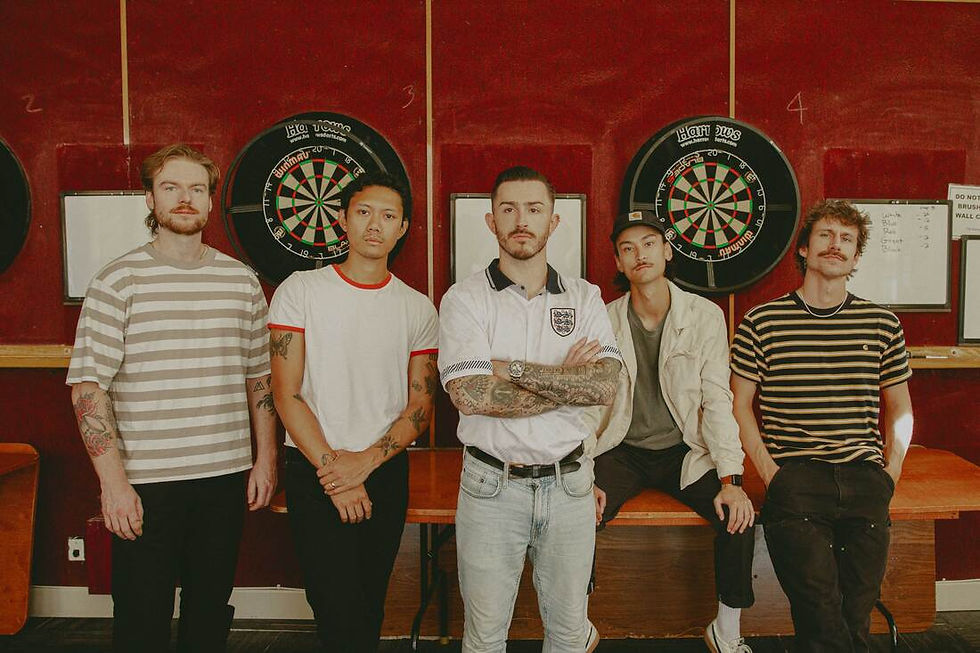
Be sure to check out Keep Your Friends Close, the band’s new album:
Stay connected with them on social media through the link below:
Chief State Linktree:
Chief State Website:
***Photo credit is attributed to brandynn-leigh, unless specified otherwise.***

Comments