

An Exclusive Interview with Indian Goth Musician Echo Eudora


I conducted a Q&A session with Echo Eudora, a goth musician from India. During our discussion, we explored her upbringing, the beginnings of her music career, her reasons for choosing this genre, her music and much more. I hope you find this reading enjoyable.
Amit Ahuja: Your background and early experiences often shape who you become as an artist. Could you share more about where you grew up and what the environment of your hometown was like—socially, culturally, and emotionally? How did your upbringing, your family dynamics, and even the community around you help shape your sense of identity and your outlook on creativity? In what ways do you feel your early life still echoes through the music you create today?
Echo Eudora: I grew up in Chandigarh. It is a small, but not so small of a city. There’s no nightclubs, no metro, everything is 15 minutes away. While some may view that as convenience, it was boring for me. There was nothing to do outside of home and my parents would often fight inside. For me, art was all I had. It was the only place where I could feel safe enough to express myself.
I grew up drawing inside of notebooks, playing with paint & writing poems about how cruel I felt the world was. My parents would often punish me for lagging behind on school work, but why on earth would I force myself to fit inside of a system that wasn’t made for me? As a child, my belief system was shaped by my moments of solitude during creation and those were often misinterpreted as disobedience or a lack of discipline.
At the age of 13, I told my parents that I wanted to finish school privately and focus on my art career - they thought I was crazy. I was forced to stay indoor, forced to wear ‘decent’ clothes, forced to stick to a routine that was just not built for me. My mom and dad wanted me to ‘get my life together’ as I grew up. I’d get punished for skipping class, but the classroom was so fucking boring. How can you expect a child to learn staring at another human speak for hours and hours inside of a four wall room? It felt suffocating. What the people around me viewed as escapism - I viewed as a way to enjoy & experience life. We are born to live, not to suffer, I will do that to my fullest, no matter who has an objection with it.
I had to fight my way out of a system that was made to keep me stuck inside of a depressing loop. Every human being is born for greatness and we must not let other people’s baggage tear us down - all of us want to be free & true to who we are, that’s what life is about. Why waste it trying to please or take part in a system that doesn’t give a shit about you?
Amit Ahuja: How has your cultural heritage influenced the person and artist you’ve become? Are there specific traditions, family stories, or cultural values that
have guided or inspired your work throughout the years? Can you recall key moments—whether triumphs, challenges, or personal transformations—that deepened your connection to your heritage and left a lasting imprint on your worldview?
Echo Eudora: My grandparents lived in Lahore before India and Pakistan were divided into two different countries. I never met my grandfather, but as a child, I remember seeing a piece of artwork of his that my grandma had kept safe. It was a brown crumbled piece of paper that she opened and showed to me, “Your grandfather made this portrait of me while I was in the kitchen.” I asked her how much time it took him to draw her and she responded saying, “Just a minute.” I remember how impressed I felt by his talent & speed. I thought to myself, “I wonder if I could do that.” I was 9 years old at that time and by the time I was 13, I could create live portraits of people. I would make one drawing and push myself harder to speed up the process. I didn’t realise at the moment that I was challenging my creativity, until a friend mentioned I drew a portrait in 30 seconds. That made me realise how fast my skill had become. I still didn’t realise I was completing a challenge I had taken on many years earlier. I was around the age of 20 when it all came to me and made sense.
That’s the thing about life - things click & begin to unravel when you stay true to who you are.
I often view my desire to live life to the fullest as a way to honour my ancestors. The British Rule terrorised brown culture. It broke human beings & divided families. My grandmother lost her brother during the riots in Lahore.Who I am today, the unapologetic vision that I have is for me and them. It is to honour the
deaths of the people that didn’t get a chance to achieve their dreams or even live their lives.
Brown history has been intentionally erased and I am here to reclaim what has always been ours - our identity.
For far too long have we let people push and break us apart. The horrors that our ancestors faced because of colonialism has left an impact that we are actively trying to heal through our art, our voice, our culture & our history.
I am here to speak for myself and for the people that have suffered before me. My song,
‘Kali’ is dedicated to people that lost their lives during the British Rule.
I’m not from India, I am from Bharat. My people are on different sides of the border and I will always create art for each and every one of them.
Amit Ahuja: The gothic and dark electronic scene is rich with mood, emotion, and atmosphere. What first drew you to this particular style, both musically and visually? Was it an intentional choice to express something specific through this aesthetic, or did it emerge naturally as your sound developed? What does the gothic identity mean to you personally—beyond just the genre label?
Echo Eudora: When I was 13 years old, I would draw sketches that teachers viewed as ‘disturbing’.They would often call my parents to school to speak about my mental health. For years, my family took me to different psychiatrists to try and understand why I was so stubborn with my views, why my art was so intense and whether it was a mental condition that was causing it.
For many years, I believed there was something wrong with me because I would not enjoy the simple things the people around me did. I would often like spending time alone inside my art book, writing or drawing. It wasn’t a specific moment that drew me to the goth culture, but a state of awareness that was inflicted out of boredom. School, friends, activities - they weren’t enough to fuel my hunger. I wanted more from life and my desire to live life on my own terms with such intense clarity - confused the adults around me.
I was 18 years old when I began meditating and found comfort in spirituality. I would lock myself in my room at night, sit by myself and journal. These moments of devotion to my inner being gave me profound clarity on my childhood and helped me understand that I wasn’t troubled - I was aware and the people around me weren’t.
I felt like a horse between a flock of sheep that was forced to act like sheep - it’s why I love the story of The Ugly Duckling - it inspired the first song I released, “Black Swan”
So much has been taken away from my childhood because I would get harshly punished for my views. I owe it to myself to live my life to the fullest.
Before I started making music, I would create visual goth art - I didn’t know this was a genre until many years later.
I was just expressing my rage and frustration through creativity. I would often use my art to protest anything I was against - whether it was a simple disagreement between my parents & I or a societal issue that involved oppression of women. My art has been my safe space through my entire life and as an adult, the only thing that’s changed is how I express it.
I began making music not too long ago, I was 25 when I released my first track as Echo
Eudora. I had released a goth E.P many years earlier in 2017 under a different stage name.But, the quality of the sound wasn’t great, so I removed it and started over. I found a friend that I worked with as a creative director who helped me create the first few tracks for Echo Eudora. He was an extremely talented sound engineer, but he wasn’t goth. I had to create my sound myself and that’s been a great learning experience for me.
Even now, I may be a musician, but my desire for greatness is limitless. There is so much
more that I want to learn & experiment with. I have created designs of fashion collections & a perfume line that I hope to one day release. My biggest challenge isn’t idea or inspiration -it’s money.
Being goth is a part of my identity while being an artist is my core. I choose to identify as
goth because of the political impact it has on society. A lot of us want the world to change and be more accessible for people from minorities. Capitalism is killing the planet, it breaks communities apart and fuels division. Being goth is standing up against that narrative by supporting homegrown brands, by returning back to community - all while honouring the monsters and demons that are inside each one of us.
You cannot chase light without knowing how to sit still in darkness. You cannot be afraid of shadows, they are you from a different perspective.
Being goth isn’t about being depressed, it’s about acknowledging the darkness in the world and facing it. It is a celebration of dance, a celebration to honour the dead & an acceptance towards beauty that isn’t standard.
Amit Ahuja: You’re originally from India, a place with incredibly rich cultural traditions but not necessarily known for having a large goth subculture. Could you share what the goth community is like where you’re from — is there a noticeable scene, or do you often find yourself standing out as one of the few who embraces this aesthetic and lifestyle? How do people in your surroundings typically react when they see you in public expressing yourself through your gothic fashion and identity? I’d love to hear what that experience feels like for you personally — not only in terms of the attention or curiosity it might bring, but also how it shapes your sense of individuality, empowerment, and belonging. And as a woman navigating this space in India, what does it mean to you to embody and represent a gothic identity within a culture that might view it as unconventional or even misunderstood?
Echo Eudora: I’ve got mixed responses for how I dress or perform. They either hate it, love it or don’t understand it at all. Just the other day, I was walking on the street and an Indian man mistook me for a foreigner who didn’t speak the language. He passed a remark about my outfit and I turned around and stared at him dead in the eye. I don’t take bullshit from anyone, but I’m also not going to engage in mindless arguments. The way I look at someone is enough to let them know I disagree with their opinion of me.
Goths In India have their own unique characteristics that they embody in their art. Some are designers, some singers, some artists. The community is beautiful, supportive & rising. A lot of younger people are engaging with the culture and that’s definitely something I’ve been striving to see for many years.
I felt extremely alienated as a child growing up in North India with no goth or alternative
people around me. I was labelled, judged, criticised for my style of work.
I stopped going to school after grade 10. I never went to college & I began working as an
artist when I was 17. I would create visual goth art - photographs, paintings, blogs, poetry. I had no support, I was told my work was ‘too dark’ and people kept thinking there was something wrong with me. Growing up was difficult and isolating, but my art gave me comfort. It taught me how to survive and that’s why I dedicate my life to it.
Amit Ahuja: Can you describe in detail the defining moment that first sparked your passion for music? Was there a specific concert, performance, or song that changed the way you saw the world? What emotions or experiences made you realize that music wasn’t just something to listen to, but something you had to create and express yourself through?
Echo Eudora: I wanted to make music my entire life. I’d day dream about stage routines, choreographies and how I would perform. It was all a vision that was waiting to be discovered. As I was growing older, my family didn’t want me to get into music. They often criticised me. They wouldn’t let me study music, they wouldn’t buy me any of the equipment I needed. It took me years to change their perspective and that was extremely draining. A lot of families want good for their children, but they confuse guidance with obedience and expect their kids to do what they think is best for them. However, I knew what I wanted since I was 13. I was sure of it. My biggest challenge in life has been convincing my parents about my desire for greatness.
There’s one thing I always tell my family, “I am going to achieve my dreams whether you
help me or not. It might take longer if I’m on my own, but it will happen irrespective of what you think. Who you want to be in this moment is your choice, I have made mine.”
There have been endless movies, bands & plays that have kept the flame for my dream
ignited. Any moment that I felt like I couldn’t do it, I would drown myself into the stories of other artists. We rise by lifting each other and while someone may feel better hearing me, Iremember my fire hearing them too. One such moment was in 2023 in London. It was challenging to convince my parents to let me visit London for a few days. I wanted to do a short course in music, but they pushed me to study photography. I had to pick my battle and I agreed - because I was going to see one of my favourite bands live. I bought my concert ticket before I had a plane ticket. I had no idea whether my parents would let me go or not.
Months & fights later, I landed in London. The moment I saw Lizzy Hale on stage, I knew in my heart that that was where I wanted to be, that was who I am meant to be and I promised myself that one day I would perform next to her in the Ovo Arena.
I read a few interviews about Lizzy and hearing how she struggled to find her voice initially, made me feel like I could find mine. I love Halestorm and I love women in Rock. Lizzy is a powerhouse. I performed one of their songs, “I Get Off” in Delhi.
Amit Ahuja: Every artist has an origin story that defines its essence. How did Echo Eudora come into existence—was it born from friendship, creative chemistry, or perhaps a shared artistic vision? What does the name “Echo Eudora” represent to you both literally and symbolically? When you first came together as a group, what were you hoping to communicate, change, or bring to life through your collaboration?
Echo Eudora: Echo Eudora is a solo act. It is the name I gave myself. I plan on getting it legally changed into my full name. A person’s name is the core of their identity, how can I live my life with a name given to me by another human being?
Echo is an echo of all the versions of her that she has lived. Eudora is inspired by my love for mythology & the ocean, it is the name of a nymph in Greek Mythology.
I am someone that continues to reinvent myself and grow as I get older, Echo is the perfect name to capture the essence of how my different versions echo through each other.
Amit Ahuja: Your lyrics feel emotionally charged and poetically layered. Could you share how your writing process begins—does it start from personal experience, visual imagery, or a specific emotion? What is it like to transform those raw feelings into words, and then bring them alive on stage in front of an audience? How does performing your songs affect your relationship to the stories behind them?
Echo Eudora: For me, writing music feels similar to journaling. I write about my experiences and how I want my listeners to feel when they hear a song. Since I was a kid, I had a habit of writing all my thoughts down into poems, it’s the same thing I do with a bit of song writing arrangement. I currently have more than hundreds ofwritten material waiting to be put into a song. Everything I experience, whether good, bad or even irrelevant, I write all of it down.
Sometimes, I want my listeners to feel depth and acknowledge darkness in my music. While other moments, I want them to have fun and dance. I try to keep a good balance between emotional intensity and sexual freedom.
Amit Ahuja Each of your tracks—such as Dharma, Kali, Shadow, and Emotionally Abusive—seems to carry a unique emotional texture and narrative weight. Could you unpack the inspiration and core messages behind these songs? What were you hoping listeners would feel, think, or question while hearing them? How do these tracks reflect your evolution both as individuals and as a collective creative force?
Echo Eudora: As a goth musician living in India, the country has been rising with fascism. There is so much religious chaos and injustice. The Prime Minister of our country is called the butcher of Gujarat. There are countless politicians that have been accused of sexual assault yetpreach words of modesty to the nation. ‘Dharma’ is about rejecting religion disguised as control. It is a protest against the corrupt politicians in our country.
I have heard such mixed opinions about Indians outside of India. The colonisers forget that they are the reason our country is in shambles. It is their media that feeds them lies about how dirty and poor we are. Every country struggles with homelessness and poverty, the rich to poor gap in India is massive and it must be a priority of the government to create better facilities for people. However, these ignorant views that a lot of white people have towards India and other brown countries is wrong. Colonisers have a habit of being white and breaking indigenous communities apart for their profits - capitalism kills the planet. ‘Kali’ is a song for brown people. ‘My brown skin has the blood of the Gods in it, you don’t have to like me and I don’t have to fucking take your shit.”
For me, Kali isn’t a symbol of religion and neither is ‘God’ they are an essence. A symbol to a name that embodies a deeper philosophical meaning. I do not follow any religious
traditions, what I pray to is the ground, the earth & the mysticism in the night sky - Kali, the term ‘Gods’ is about our higher selves, not an exterior factor or person. At the end of the day, we are here to understand ourselves better, to understand our mind and accept who we are without any shame or guilt.
Amit Ahuja: For someone completely unfamiliar with your work, how would you describe Echo Eudora’s sound and artistic identity? What elements make your approach to gothic electronic music distinct from others in the genre? How do you balance accessibility with artistic depth, ensuring that your music resonates with both niche and broader audiences?
Echo Eudora: Echo Eudora creates different styles of music - one that allows people to sit still in silence and introspect while also allowing people to embrace sexuality, to dance & celebrate life. It is important to talk about political, societal & cultural issues in your music, while also remembering to have fun. I create a balance between these forms. A few of my songs are goth, while many are alternative experiments between rock, metal & trance. It’s important to continue to experiment with sounds that resonate with the story you wish to share. I have plans on creating a lot more rock songs along with 90s dark wave. The beauty of free will is that I do not have to pick one specific genre, I can do whatever I want. My identity cannot be limited, being goth is a part of who I am, but I am many other things as well.
Amit Ahuja: Music rarely exists in isolation. Beyond sound, what other forms of art inspire you most deeply—whether it’s literature, film, painting, or fashion? Are there particular authors, directors, or artistic movements that have influenced the emotional or conceptual framework of your work? How do these creative influences weave into the sonic world you build as Echo Eudora?
Echo Eudora: Growing up in a loud house, where your only friends are imagination, paint or the T.V - movies have played a huge role in comforting me. As a teenager, the lack of goth community around me made me feel isolated. There were moments I didn’t want to be alive. I found no comfort with the people around me, but watching something like, “Saving Greta” or “Girl, Interrupted” was a good way to feel loved.They don’t make Dracula movies like the 90s anymore, I still remember the first time I saw
Dracula on T.V - I was a little girl who wanted to be kidnapped by the beast. Monsters didn’t seem like something to be afraid of, they felt like beings that were misunderstood. This view of mine has often landed me into a lot of trouble when I was younger. I’d often surround myself with people who would hurt me because I kept forgiving them. For me, channeling all of my energy into my art and creating healthier boundaries in personal life has made a huge difference in shaping my career and who I am as a person.
Amit Ahuja: Visual presentation is a crucial part of your artistry. Your aesthetic, from stage outfits to album visuals, feels deliberate and immersive. Could you discuss how your fashion, makeup, and imagery connect to your sound and storytelling? What emotions or narratives do you hope to evoke through your visual style, and how do you see that blending with your musical message?
Echo Eudora: As a multidisciplinary artist, I always wanted to present my vision to the world in a way that felt beyond one specific form of communication. I make sure to tell a narrative through audio-visual storytelling by my music, my lyrics, the way I sing, how I move on the stage - it is all a part of the experience. Artists thrive for greatness; the more you work on your craft, the more ideas & experiments you create, allow you to be as limitless as possible. That is my vision - to do more & to be more. It takes dedication and a shit ton of practice to perfect a single performance.
Amit Ahuja: The future always holds new opportunities for reinvention. Are there any projects, collaborations, or tours currently in motion that you’re especially excited about? What new musical directions or creative ideas are you eager to explore next, and how do they reflect your growth as a artist?
Echo Eudora: I’ve been performing at underground goth nights in Goa. Nobody knows what goth is here, but I have been introducing the sound & culture - my vision is to bring a lot more goth music to the places I go. It’s a way of life. For Halloween, I enacted a performance that told the story of Kali & Shiva; not in a religious context, but in a way where the essence of the narrative is rage, consciousness, fury & fire.
I’m looking forward to collaborating with a lot more performing artists & goth musicians. I am an actor, a singer, a vessel of the stage and I hope that I can continue to express myself till my last breath. It has been a great experience to recently collaborate with a Techno DJ to create a blend between 90s dark wave & dark techno. Both are extremely different genres, we mixed the tracks in a way that allowed our music to blend into one. DJ Han8ini has been extremely supportive throughout the process and it has been a beautiful experience to share our love for music with each other on the dance floor.
Amit Ahuja: People often romanticize the life of an artist, but few understand the behind-the-scenes reality. What are some of the daily challenges and unexpected responsibilities of being an independent band that fans might not be aware of? How do you navigate the balance between creativity, self-promotion, and practical logistics while keeping your artistic spirit alive?
Echo Eudora: There’s different kinds of people & places in India. While in North India it has been relatively challenging to find venues that are accepting towards the goth community, the South side has been a lot more welcoming. My experience has been drastically different between the two. The venues in Goa are more open to experimental music acts & performances whereas in Delhi, they expect more commercial events. At the end of the day, it all comes down to the crowd. Venues create expectations from artists based on what the audience wants. The more goths show up as audience, the more welcoming the venues will be towards artists.
There is a sweet spot between mainstream & underground and that’s the perfect place for the community to be for allowing more goth musicians to show up while also keeping the community away from capitalistic exploitation.
I faced many logistical challenges in Delhi because a lot of venues hesitate to pay well to
performers, but my experience in Goa has been the opposite.
It truly depends on the kind of people you perform with. Many artists are supportive,
welcoming and collaborative while some can be a bit rigid.
If you surround yourself with good quality of people, they will be there to help you navigate through your challenges.
The community in Goa is full of independent artists that uplift each other and it has been a privilege to perform here next to so many talented people.
Finding a goth community in Delhi was a beautiful surprise, it introduced me to so many
other goths that are welcoming & supportive towards each other.
Amit Ahuja: When you think about the future, where do you see Echo Eudora in the next five years? How do you envision your sound and your message evolving as you continue to push creative boundaries? Are there milestones—whether artistic, personal, or philosophical—that you hope to achieve as part of this ongoing journey?
Echo Eudora: I would like to create darker music with the right sound quality. It has been challenging to create a balance between the two since I started producing my own music. I would like my skills as a producer to develop a lot more for me to reach my full potential.
As an artist, I would like to create immersive exhibitions and sculptures. I love playing with my hands and exploring creativity. The world is full of so many different kinds of sounds and souls that I would like to experience.
I love to perform on stage and I would like to be involved in more dialogue scripts. That issomething that I look forward to achieving in my career. It would be a dream come true to have a role in a horror film that is full of art in a sexually empowering way.

Amit Ahuja: Every creative journey is shaped by the people we meet along the way. Who are some of the individuals—whether mentors, peers, or even critics—who have had a profound influence on your artistic development? How have these relationships, both positive and challenging, molded your outlook, discipline, or motivation as musicians?
Echo Eudora: As a teenager, my parents would often try to control me. The punishments eventually pushed me to leave home. I ran away from my house to what I thought would be a safe space, but ended up being full of drug addicts. I was 17 years old when I injected heroine.
My entire life, I had been pushed, I wanted to break free, but I went towards the wrong
direction, only to find myself being pushed around by a different group of people. I felt lost, broken and in pain. The people around me had stolen my belongings, I had no phone, no money, no place to go and the things I saw changed me. Everyone I was surrounded with was many years older than me, the way they spoke and behaved, appalled me. I used to think in my mind, “I hope I never turn out like that when I’m 25.” This realisation brought me back home, away from drugs. But, I was still confused at that point in my life. I still felt alienated from my family and I wanted to protest and create something new in a way that wouldn’t harm me. That’s the moment I began meditating. The irony is that my first experience through meditation wasn’t by choice, but by accident.
There was a vision I had during my experience with psychedelics at 18, it felt like a spiritual awakening. It somehow pushed me into meditation and that’s the moment I began to look back at my childhood, my past experiences and work on myself.
It’s the moment I realised that even when I was an addict, even when I was a kid, to this
very day, so many things have changed, so many people have come & gone, but the onething I never stopped doing was creating art. That made me realise how precious my art truly was. I was ashamed for going towards addiction when all I really wanted was support from my family. I felt like the only way I could forgive myself was by allowing myself to heal.
The horrors of what I experienced during this time is what keeps pushing me. I’ve worked-on myself so much throughout the years that people either don’t believe I used to be an addict or cannot fathom that I no longer am one. And, if a person has the capacity to grow & transform then they have the capacity to achieve their dreams.
Life is meaningless until there’s art and imagination in it. The mind is a beautiful thing to
explore and while addiction pushed me towards the wrong direction, it showed me that all I needed was to believe in myself. I used to wait for people to save me, but I had to save myself and if I can, so can you, so can anybody. The world is big enough to support all kinds of talent and we must keep creating art till we die.
A few months ago, I spoke to Scott Baker Graham, a talented goth musician in Denmark. The similarities between our stories inspired me. It’s beautiful how two people living on different parts of the world can have such similar experiences. Scott has become a good friend of mine and his ability to express pain through sound is a beautiful gift. We will be working on a song together and I’m very excited about that.
Amit Ahuja: Rejection and failure are almost inevitable in the creative world. What advice would you give to young artists struggling with disappointment or creative doubt? How can those painful experiences be transformed into opportunities for growth and self-discovery? Have there been moments in your own careers where setbacks led to unexpected breakthroughs?
Echo Eudora: Failure is nothing, but a waiting game. As long as you keep working on your craft and yourself, sooner or later, the right doors will begin to open for you.
You’ve got to be dedicated enough to prioritise your art and emotionally mature enough to manage your personal struggles along the way.
The best part about being an artist is that any kind of setbacks you face can be inspiration for a new piece of work. If you’re drowning in failure - you’ve got a lot of material to make art about. A shift in perspective is sometimes all it takes.
Amit Ahuja: Artistic energy needs balance to thrive. Outside of music, what passions or hobbies bring you joy and help you recharge? Do you find inspiration in nature, travel, visual art, or something completely different? How do these experiences outside the studio feed back into your creative process?
Echo Eudora: Outside of art, I love the ocean. I love to connect with animals and a true animal lover is a vegan. Fish communicate through sound, vibration & electric fields. Isn’t that a bit similar to telepathy? We have species in the ocean that are magnificent, ancient & almost mystical. I like reading about them and I would like to get my diving license soon. It’s one of the reasons why I came to Goa. I’ll be volunteering at an ocean conservation project with Reef Watch. I’m looking forward to learning more about marine life & ecosystems.
As human beings, we should learn how to be active members in our community. The planet is our home and we must be conscious about how we give back the same care & kindness it gives us. The industrialists kill the planet and in return, nature fights back. Capitalism hurts minorities, endangers wildlife and pushes agendas that enforce control. We must learn to break free from these is these narratives. There is power in community.
Amit Ahuja: Happiness and success mean different things to everyone. How do each of you personally define happiness in your life, and in what ways does that sense of fulfillment intersect—or perhaps conflict—with your artistic ambitions? How do you stay grounded while pursuing creative and professional growth?
Echo Eudora: There are many of us that have suffered, that have felt pain, misery and betrayal. Some of us seek revenge, some drown in shame, while others wish to end their lives. The world is what we build. If we want peace, comfort or justice, we must create it by honouring the values that make us human.
Amit Ahuja: Creativity and mental health are often intertwined in powerful ways. Can you share any personal experiences with navigating mental health challenges throughout your artistic journey? What coping tools, habits, or support systems have helped you stay resilient? And what advice would you give to other artists learning how to protect their well-being while staying creatively expressive?
Echo Eudora: My art is my life. This is my happiness. The things I paint, the songs I sing. As long as I shall have the power to create and be heard, I will always be happy.
Amit Ahuja: As we bring this conversation to a close, what final reflections or heartfelt messages would you like to leave with your listeners? Is there a particular philosophy, truth, or piece of wisdom that feels especially important to share right now—something that represents who you are, both as individuals and as a band, at this moment in time?
Echo Eudora: Learn to find comfort in yourself. You must be independent and support yourself emotionally or you will continue to rely on others for validation. The best thing you can dois to sit alone, write, think, understand who you are and what you stand for. When you understand yourself, there isn’t a thing in the world that can pull you down. Act from conscious, forgive with grace and ignore what’s irrelevant when you know the power you hold is worth greatness. Remind yourself of who you are - not better and not less, just the same flesh and bones with a mind waiting to be explored.
Amit Ahuja: If you could speak to the entire world for just five minutes, what would you say? What message, truth, or piece of wisdom would you want to share with humanity—and how does that message connect to the core values and emotions expressed in your music?
Echo Eudora: I hope that I can continue to honour my listeners by my words and actions. Everything I do, I do with love and truth and I hope people can feel that when they enter the world of Eudora. This isn’t domination, this isn’t control or superiority - this is surrender to my craft.
Amit Ahuja: Thanks to Echo Eudora for sharing your stories with us today.
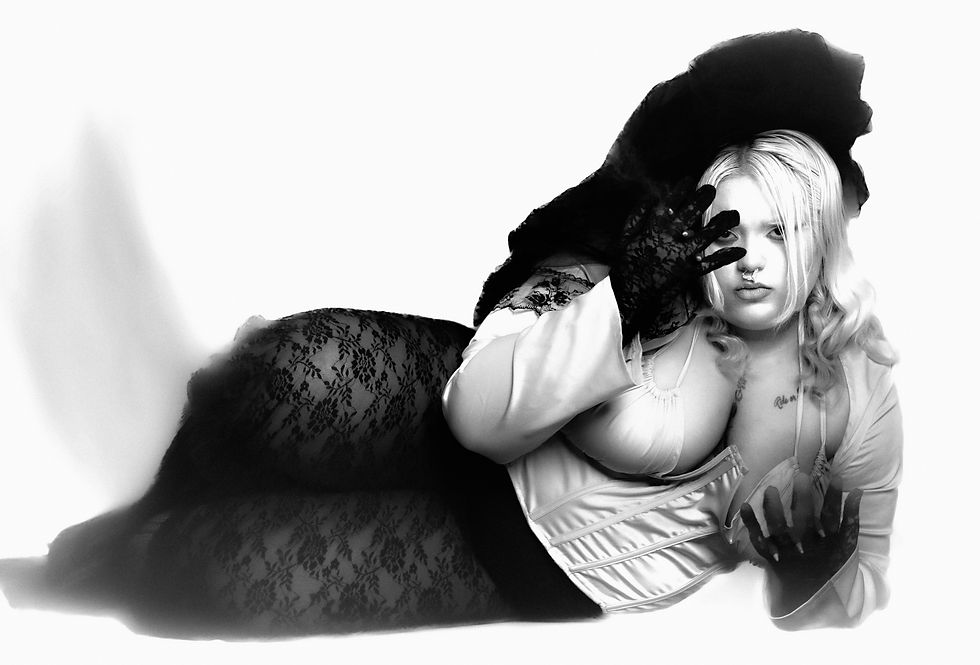
We encourage you to explore her work and support her music at the Linktree below:
*** All photos below to Echo Eudora unless otherwise noted***


xosoplus mobi mình lướt thấy tên hoài nên bấm thử cho biết, chủ yếu xem họ bố cục ra sao chứ không quan tâm lắm chuyện dự đoán. Vào trang thấy họ chia mục theo kiểu XSMB khá dễ hiểu, kiểu đang ở “Chủ Nhật” rồi nhảy tới bài ngày 19 07 2026 và có luôn phần dự đoán cho 20 7 2026 nên mình không phải mò nhiều. Kéo xuống thì mình để ý cái bảng “Đầu Lô tô Đuôi Lô tô” nhìn gọn, chia cột rõ ràng nên đọc nhanh không bị hoa mắt. Nói chung dạng hiển thị số liệu kiểu này hợp với ai chỉ muốn liếc phát nắm ý, nhất là khối “Đầu Lô tô…
https://keonhacai5.com/ mình ghé thử cho biết vì thấy bạn bè nói qua, kiểu vào xem giao diện thôi chứ không định ngồi đọc lâu. Ấn tượng đầu là trang chia khối nội dung khá gọn, nhìn lướt là biết đâu là phần nhận định, đâu là kèo/tỉ lệ, không bị dồn chữ. Mình có thấy bài Girona vs Athletic Bilbao (03h00 ngày 05/11) để tiêu đề rõ ràng, kéo xuống là đoạn nào ra đoạn đó nên đọc nhanh cũng ổn. Mấy bảng kèo trình bày theo cột nhìn khá “thoáng”, không phải zoom hay căng mắt. Thanh menu đặt chỗ dễ thấy nên chuyển bài cũng tiện, nhất là phần heading và khung nội dung căn đều, nhìn sạch…